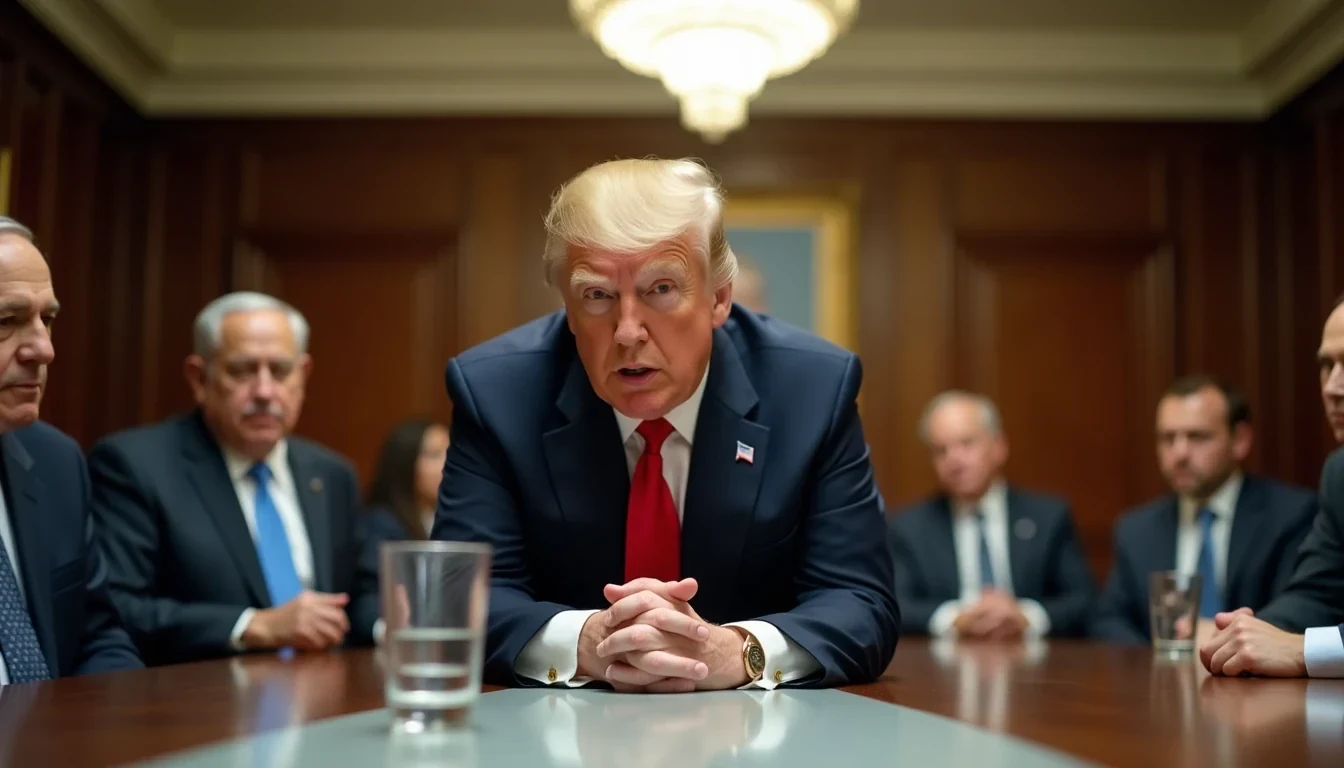
Donald Trump’s reported warning to Benjamin Netanyahu cuts against the lazy assumption that U.S. backing is a blank check. When the subject is Turkey, a NATO member with a large army and real regional reach, the fantasy of effortless escalation collapses fast. Netanyahu allegedly treated Ankara like another Iran. Trump, according to Barak Ravid’s account, treated it like a problem that could spiral beyond anyone’s control.
That exchange lands in the middle of a familiar but badly misunderstood alliance story. Israel can count on deep American support in many settings. It cannot assume that every Israeli threat assessment becomes a U.S. commitment, especially when the target is a state with the scale, equipment, and political leverage to make a war expensive from the first hour.
The account behind the argument
The reported conversation comes from Barak Ravid’s 2023 book, Trump’s Peace: The Abraham Accords and the Reshaping of the Middle East. In Ravid’s telling, Netanyahu urged Trump to view Turkey as a military danger on the level of Iran and to consider hitting it if necessary. Trump reportedly rejected that logic.
His objection was practical, not sentimental. Turkey is not a fringe militia target or a weak neighbor waiting to be bullied. It fields one of NATO’s largest standing forces, roughly 425,000 active personnel. It has spent years building a domestic defense industry that reduces dependence on foreign suppliers. It has modern fighter aircraft, expanding drone capabilities, warships, submarines, and a record of operating beyond its borders in Syria, Iraq, Libya, and the Eastern Mediterranean.
Netanyahu’s reported comparison to Iran tells you something else. Israel’s security class sees Turkey under Recep Tayyip Erdoğan as more than a diplomatic irritant. It sees a regional actor that mixes anti-Israel rhetoric, support for Palestinian causes, and hard power in a way that can complicate Israeli freedom of action. That suspicion did not appear overnight. It has roots in a much older relationship that went from cooperation in the 1990s to open hostility after the 2010 Mavi Marmara raid, when Israeli commandos killed 10 Turkish activists and the diplomatic damage spread well beyond the immediate crisis.
Turkey is not an easy target
Trump’s reported response was not subtle. If the account is accurate, he was saying that a clash with Turkey would not look like a limited punitive strike or a symbolic exchange. It would be a serious military problem.
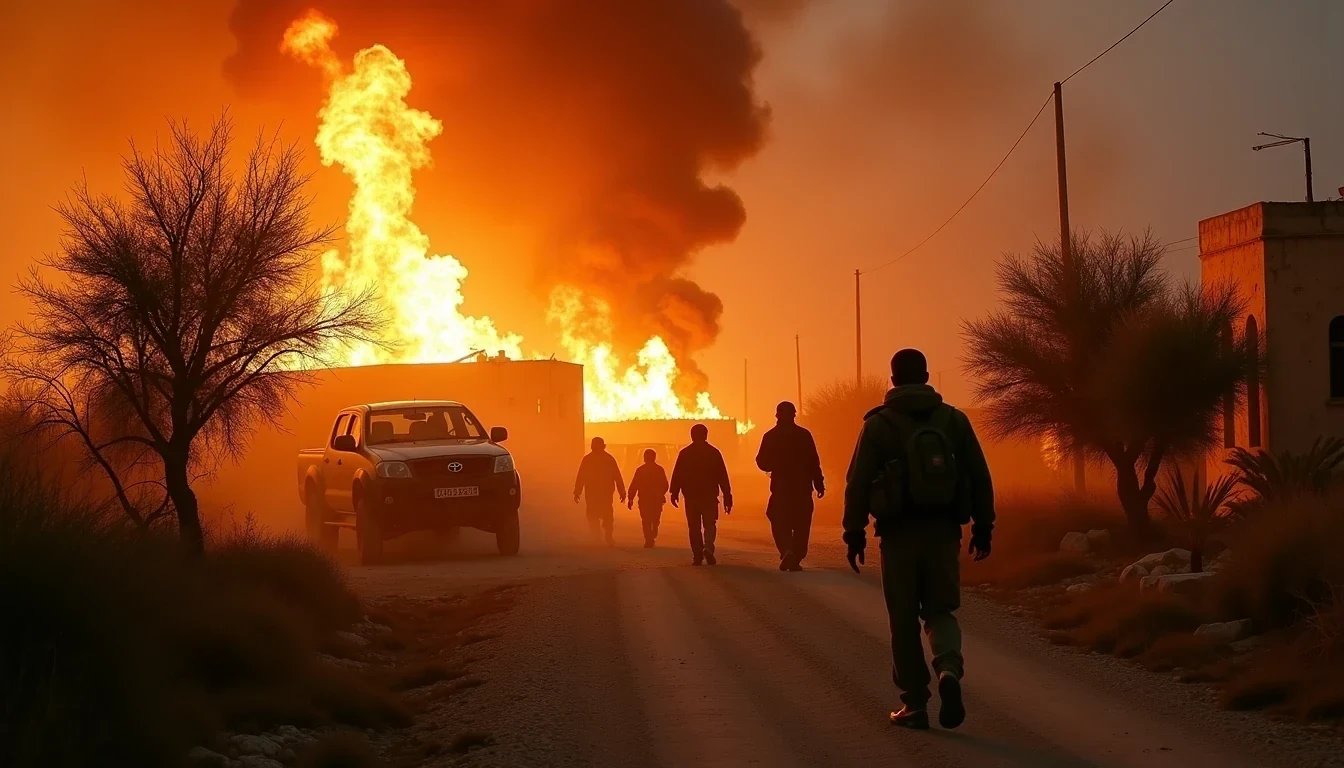
That judgment is hard to dismiss. Turkey’s 2023 defense budget was estimated at about $15.8 billion. Its air force includes F-16s and a growing fleet of domestically produced drones such as the Bayraktar TB2. Its navy is large enough to matter in regional planning. It also controls geography that matters far beyond its own borders, including the Turkish Straits. A country like that can absorb pressure, retaliate, and complicate a regional campaign in ways that smaller states cannot.
Iran is a useful comparison only up to a point. Tehran has more active personnel on paper, around 610,000 when the Revolutionary Guard is included, and a larger official defense estimate. But Iran leans much more heavily on asymmetric warfare, proxies, missiles, and deniable pressure. Turkey’s advantage is different. It combines conventional military weight with NATO training, a growing industrial base, and a willingness to use force directly, making it a different kind of risk.
Trump’s warning also hit a nerve that runs through the U.S.-Israel relationship. For decades, some Israeli planners have assumed that Washington would eventually step in if a confrontation escalated badly enough. Trump reportedly told Netanyahu not to count on that reflex. That is a blunt and useful reminder. The United States can be a close ally without promising to absorb every cost of somebody else’s regional gamble.
The alliance logic is getting thinner
This story stops being a Netanyahu-Trump anecdote and starts looking like a case study in alliance discipline. U.S. foreign policy has long tolerated Israeli freedom of action while quietly limiting what it will actually underwrite. Trump’s “America First” instincts made that limit louder. He was willing to support partners, but not to pretend that support was automatic, limitless, or detached from U.S. interest.
That stance matters because Turkey is not an abstract rival. It is a NATO member, a power with real military capacity, and a state with enough leverage to make intervention messy for everyone involved. If Israel were to drift toward a direct confrontation with Ankara, the United States would face a bad choice between a partner it values and a broader strategic problem it does not want. Trump’s reported answer was to refuse the premise that the U.S. should be dragged in on Israel’s timetable.
The larger implication is less dramatic and more serious. Alliances work best when each side understands the difference between shared interest and automatic rescue. The more powerful the regional players become, the thinner those assumptions get. A country can be a friend without becoming a guarantor, and a guarantor can draw a line without abandoning the relationship.
What survives the test
Netanyahu’s alleged position reflects a hard Israeli view of Turkey’s trajectory under Erdoğan, especially amid tensions over Gaza, Jerusalem, the Al-Aqsa Mosque, Hamas, and the Eastern Mediterranean. Trump’s reported pushback reflects a harder American view of limits. He was not promising neutrality. He was saying that size, capability, and geography still matter, and that the United States should not be treated as a force multiplier for every allied confrontation.
That is the part worth keeping. The myth is that alliances erase restraint. The reality is that serious alliances require it. Turkey is strong enough to make a regional war costly. Israel is capable enough to contemplate options that should stay off the table. The United States is large enough to be pulled into the consequences, which is exactly why a president would warn against assuming it would.
The reported exchange is useful because it punctures a comfortable illusion. It shows how quickly friendly coordination becomes strategic uncertainty once the target is not weak, not isolated, and not easy to punish. In that setting, the hardest sentence in Washington is usually the right one: do not assume we will bail you out of this.