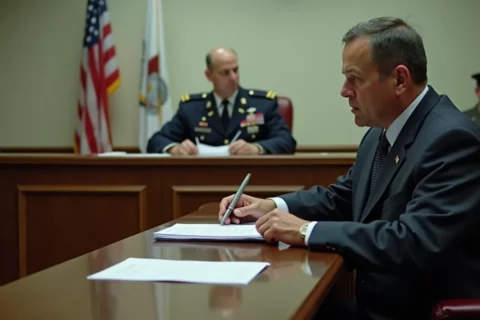

When a man boards a commercial flight with an emergency crash axe and a plan to slam 170 people into an airport or a city tower, the story writes itself in one of two directions. The first is political: it details what he said he wanted, the grievance he named, and the conflict that produced him. The second is operational: it explains how he got through, who stopped him, and the security gap that must close. After Hamam al-Hammami attacked Captain Smit Machchhar aboard Flydubai Flight FZ1073 on September 30, mainstream Western outlets chose the second path almost exclusively. That choice was not neutral; it was a decision about what the public should be allowed to consider.
The Gap Between Confession and Coverage
Al-Hammami told investigators precisely why he did it. He wanted revenge for Gaza. He intended a September 11-style martyrdom operation, crashing the Boeing 737 MAX into Ben Gurion Airport or a Tel Aviv tower after entering Israeli airspace under routine radio contact. The 17,000-foot dive he triggered, the struggle in the cockpit, the subduing by passengers and crew, and the landing by two deadheading off-duty pilots traveling in the cabin all happened after he had already named his motive.
Yet the framing that reached American and European audiences emphasized radical Islamist terrorism, lone-wolf radicalization, psychological pathology, and aviation security failures. The BBC and The Guardian, among others, categorized the event within a familiar genre of Islamist violence while giving minimal space to the specific political grievance al-Hammami had volunteered. Regional reporting, by contrast, foregrounded his Gaza vengeance motive as the central fact of the case.
This is not a dispute over accuracy in the narrow sense. Al-Hammami did consume extremist material online, and investigators believe he acted alone. The security failures were real and severe. Oman Air had barred him from flying in 2024 due to extremist views and possession of extremist materials, placed him in a deradicalization program, and shifted him to a desk role. Flydubai hired him in February 2026 after a criminal background check that failed to verify his restrictions with Omani authorities. UAE authorities are now investigating the airline’s hiring processes, and counter-terrorism agencies including Australian federal authorities are reviewing his background and time studying abroad. These are legitimate angles. They are simply not the only angles, and the systematic elevation of some facts over others produces a narrative that al-Hammami himself would not recognize as his own story.
Why the Political Motive Disappears
The de-politicization of politically motivated violence serves identifiable interests. For media organizations, acknowledging an attacker’s stated grievance risks appearing to legitimize terrorism as a form of protest. Editorial caution is real and not without precedent: coverage that dwells on motive can read as explanation, and explanation slides easily into justification in the minds of audiences already polarized on the underlying conflict. From this perspective, it is better to pathologize the individual and technicize the failure.
For states, the incentives align further. A Gaza-linked security narrative raises uncomfortable questions about regional instability, the downstream consequences of policy choices, and whether aviation security frameworks are adequate to political grievances that operate across borders and ideologies. The United Arab Emirates, which normalized relations with Israel in 2020, has particular reason to manage how this story circulates. The heroic narrative, the official visits to the wounded captain, and the passenger interviews all perform valuable public relations work. This transforms a near-catastrophe into a story of resilience, of ordinary people rising to the occasion, and of systems that bend but do not break. The deadheading pilots who actually landed the aircraft receive less attention than the passengers who subdued al-Hammami, because technical competence is harder to sentimentalize than civilian courage.
The result is a sanitized event. Systemic failures remain visible enough to demand reform. The human drama remains vivid enough to engage readers. The political context that produced the attacker dissolves into the background noise of generic extremism.
Competing Heroisms
The divergence in framing reflects a deeper divergence in worldview that no amount of careful reporting can bridge. Under international law and the dominant Western interpretive framework, al-Hammami’s act is mass-casualty terrorism. Those who prevented him are heroes. The moral architecture is clear.
The operator’s observation that “the children of Gaza would have a completely different view of who the actual hero in this story would be” names something that sanitized coverage cannot accommodate. It does not require endorsing that view to recognize its existence. It requires only acknowledging that populations living under sustained military pressure, experiencing high civilian casualty rates, and seeing their political demands repeatedly frustrated may filter the same events through a fundamentally different moral framework. This is not necessarily a framework that approves of targeting civilians, but one that locates the original violence elsewhere, traces causality through a longer chain, and finds heroism in retaliation rather than prevention.
Palestinian advocates themselves dispute whether violence of this kind amplifies or damages their cause. The debate is genuine and strategically consequential. But it cannot even be held if the motive is erased in the first instance. When Western media frames excise the Gaza reference, they do not merely avoid legitimizing terrorism. They foreclose a set of questions about political violence, its origins, and its interpretation that remain live for substantial populations around the world.
The Cost of Legibility
The Flydubai plot is a case study in how media framing constructs political reality. Al-Hammami offered a coherent, if monstrous, political rationale. The coverage gave audiences a security breach and a human interest story instead. This is not conspiracy; it is the accumulated effect of editorial judgment, institutional caution, state interest, and the genuine difficulty of reporting on violence whose context is emotionally and politically charged.
The problem is that the resulting narrative fails its own test of coherence. A man barred from flying for extremism, routed through deradicalization, hired by an airline that did not check, who then attempts mass murder in the name of a specific political grievance, is not merely a lone wolf or a security lapse. He is also a data point in a larger pattern of regional radicalization that connects to policy choices, to conflict duration, and to the perceived legitimacy of available political channels. To report one dimension and suppress the other is not objectivity. It is a frame that serves some interests and obscures others.
The sharp observer does not need to choose between condemning the act and understanding its context. The false choice is itself a product of the framing. The coverage of Flight FZ1073 reveals how thoroughly that false choice has been institutionalized, and how much of the political world disappears when terrorism is rendered as pure pathology, pure failure, pure heroism against the dark.