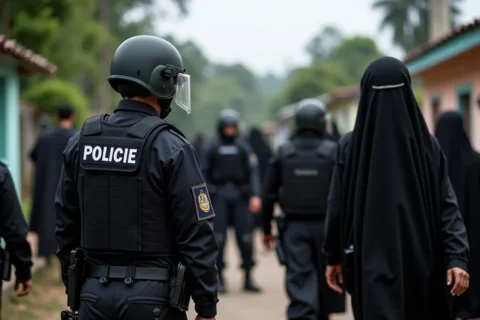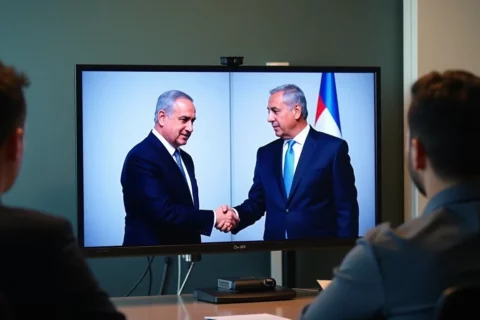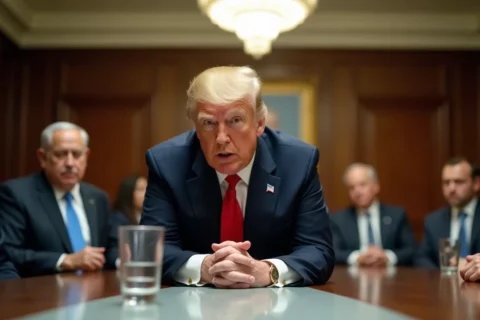
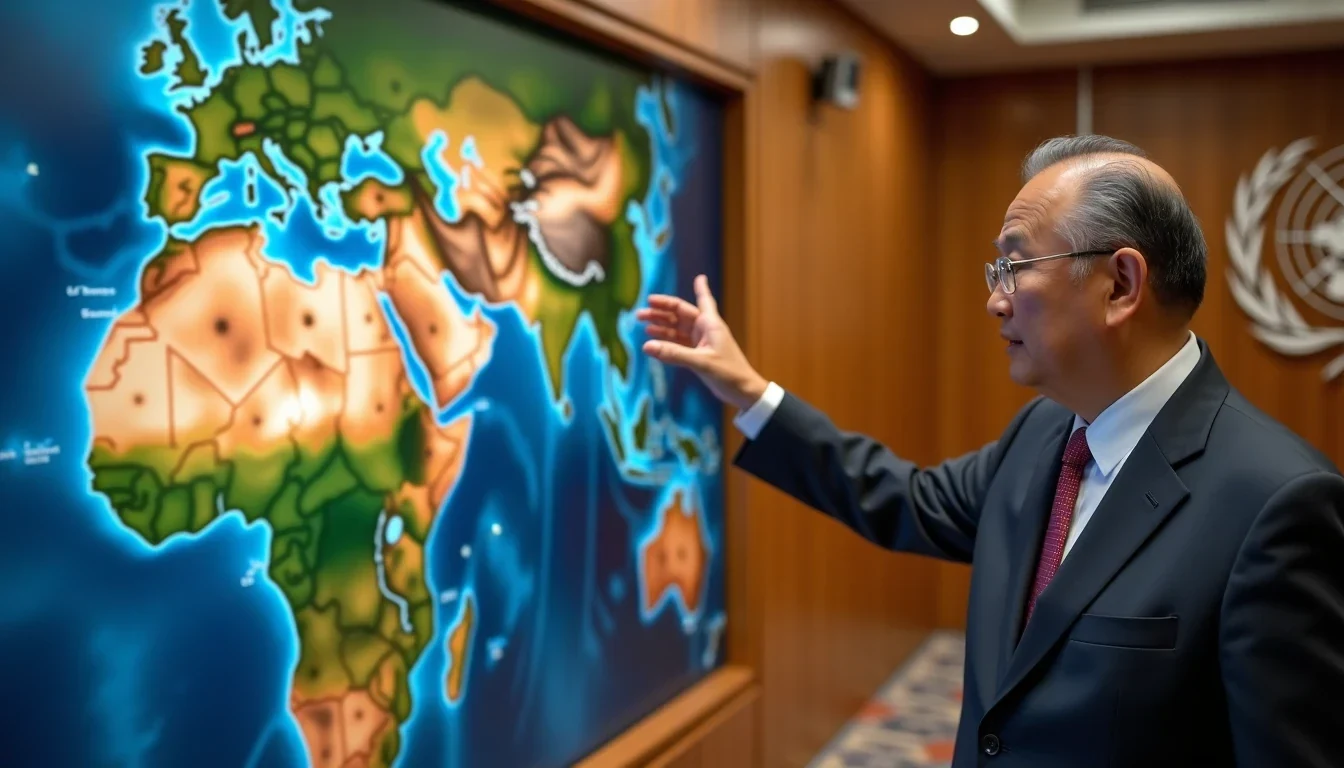
China treats Israel as the main engine of Middle East disorder, while handling Iran with gloves on. This is not a neutral reading of the region. It is a diplomatic choice, and Beijing has repeated it often enough that it now functions as a frame: the Palestinian issue is the real source of turmoil, Israeli military power is the recurring accelerant, and Iran is either secondary or conveniently omitted.
For Washington, this bluntly reverses the usual explanation of the region. U.S. officials tend to see Iran’s proxy network, missile program, and nuclear ambitions as central facts of the security picture. Beijing points elsewhere. The gap shapes everything from UN language to the way China casts itself as a responsible power.
The story Beijing prefers
Chinese officials return again and again to the same argument. They describe the Israeli-Palestinian conflict as the root problem, the issue that keeps spilling into Gaza, the West Bank, Lebanon, the Red Sea, and beyond. Foreign Minister Wang Yi has used that logic repeatedly since the October 7, 2023 attacks and the war that followed, presenting the conflict as the fundamental source of regional instability.
The supporting vocabulary is consistent. China invokes UN Security Council Resolutions 242 and 338. It condemns the occupation of Palestinian land. It rejects Israeli settlement expansion as illegal. It describes the blockade of Gaza as collective punishment. It frames Palestinian statehood, including East Jerusalem as a capital, as a matter of legitimate national rights rather than a bargaining chip.
This is the core of the Chinese case. Israel is depicted as the actor with the power to change the temperature of the entire region because it controls territory, borders, movement, and military force. When Gaza erupts, Beijing blames Israeli operations for the escalation and for the humanitarian wreckage that follows. Hamas is rarely treated with the same moral or political weight in Chinese statements. The imbalance is deliberate.
What China leaves out
The omission is the point. In Western and especially U.S. analysis, Iran is not a background character. It is a state sponsor of armed groups, a weapons pipeline, and a nuclear proliferation problem. Hezbollah in Lebanon, the Houthis in Yemen, Iraqi militias, Hamas, and Palestinian Islamic Jihad all sit inside a broader Iranian system of influence or support. This common U.S. reading explains why Washington keeps mixing sanctions, deterrence, and regional alliance building.
China almost never talks that way in public. Tehran’s nuclear activity is not the centerpiece of Chinese diplomacy. Its proxy relationships are not treated as the main source of regional violence. If those issues appear at all, they are often folded into a wider claim that Palestinian grievance, Western pressure, or Israeli action created the conditions for escalation in the first place.
That selectivity runs through the language too. Beijing stresses sovereignty, non-interference, and political dialogue. Those are real principles in Chinese foreign policy, but they are not applied evenly. When the topic is Israel, China is willing to speak in the language of occupation, illegality, and humanitarian harm. When the topic is Iran, the rhetoric turns quiet.
The result is a very specific narrative architecture. Israel is the visible villain. Iran becomes a problem best managed through silence.
Why Beijing likes this frame
The strategic logic is easy to see. China imports enormous volumes of oil and gas from the Middle East. It needs stable relations with Saudi Arabia, Iran, and the Gulf states at the same time. A public posture that leans hard against Tehran would complicate that balance. A posture that focuses blame on Israel is easier to sell across the Arab and Muslim world, where the Palestinian issue still carries enormous political force.
This also helps China present itself as different from the United States. Washington is tied to Israel through military aid, diplomatic cover, and a long record of public support for Israel’s right to defend itself. Beijing uses that relationship as evidence that the U.S. is part of the problem. By contrast, China casts itself as the adult in the room, the one urging dialogue, ceasefires, and multilateral process.
The Saudi-Iran rapprochement brokered by China in 2023 strengthened that image. It gave Beijing a concrete example of diplomatic reach without military intervention. It also fed the broader Chinese pitch to the Global South: the U.S. builds blocs, China mediates; the U.S. picks sides, China talks to everyone.
A second incentive is less cosmetic. China wants a stronger role in institutions where the U.S. still sets the tone, especially the UN Security Council. Its repeated calls for immediate ceasefires in Gaza, humanitarian access, and a political settlement around Palestinian rights are part of an effort to build a record of leadership on a visible global issue.
The limits of the argument
China’s framing works better as diplomacy than as analysis. It captures one real truth: the Israeli-Palestinian conflict remains a live source of anger, grievance, and instability. It does not follow that Israel is the only or even the main driver of every regional flare-up. The Chinese line becomes selective enough to look like strategy rather than judgment.
Iran’s role is not an abstract talking point. It is visible in rockets, drones, shipping attacks, funding channels, and militia coordination. A narrative that treats those facts as secondary is not trying to explain the whole region. It is trying to reposition the blame.
Beijing’s language resonates strongly in some capitals and poorly in Washington. Arab and Muslim-majority governments often welcome a permanent Security Council member that speaks the language of Palestinian rights and Israeli restraint. U.S. officials hear something else: a rival great power using moral language to dodge an awkward subject and to weaken the coalition that constrains Tehran.
What survives the test
China is not confused. It is choosing a frame that serves its interests, flatters its diplomatic brand, and keeps doors open from Riyadh to Tehran. The price is obvious. The more Beijing portrays Israel as the central source of Middle East instability, the more it exposes how carefully it is avoiding Iran’s role in the same region.
This is the story: not balance, not mediation, but a selective account of disorder, built to make one adversary look like the problem and another look like an inconvenience.