Donald Trump tried to cast the Strait of Hormuz as a paid rescue operation. China answered that the route was already open and Washington’s Iran policy caused the real damage. This is a much uglier story for the United States, because it turns the crisis from a case for American intervention into an exhibit for American responsibility.
The dispute matters because the numbers are absurd, even by Trump standards. He reportedly wanted $2 billion a day to “reopen” a shipping lane that, according to Beijing, was never closed. Once you strip away the theater, the argument becomes simple: if your government helps trigger instability, why are other countries being invoiced for the cleanup?
The American version
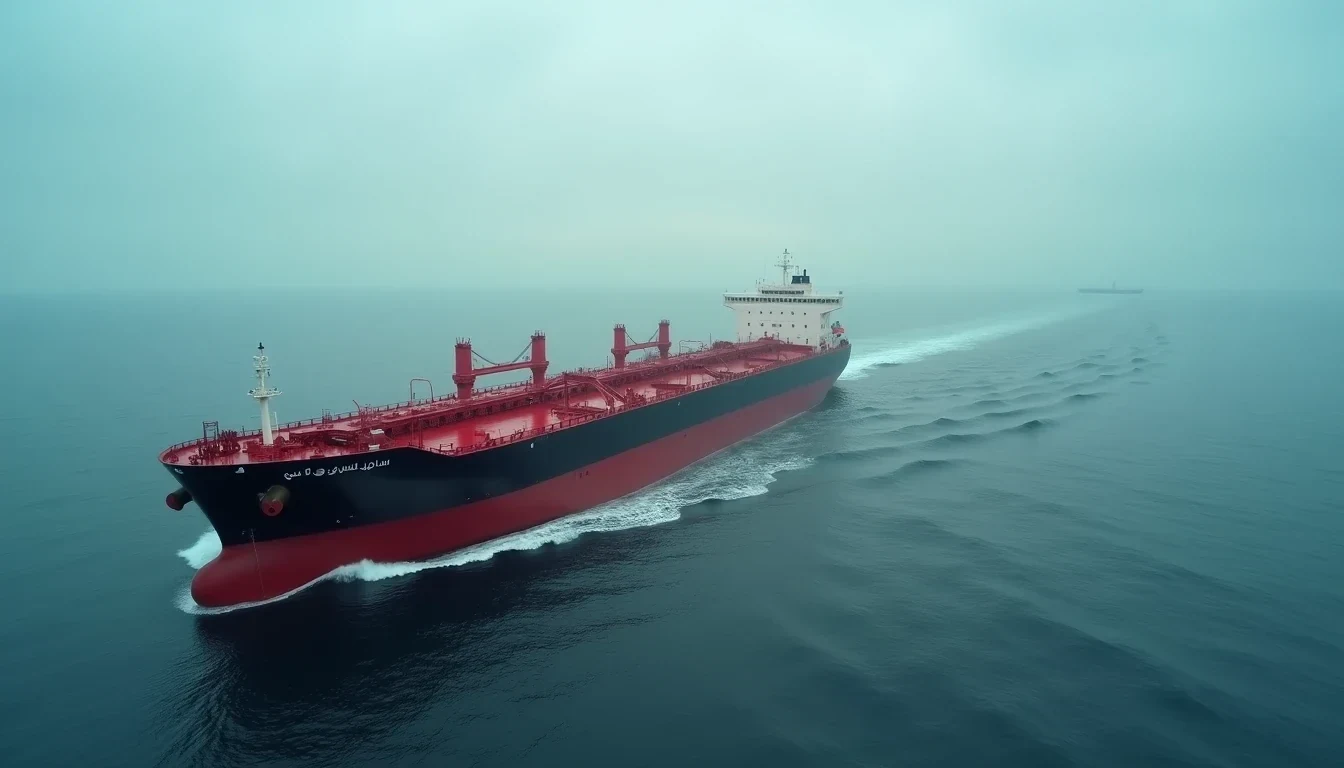
Trump’s pitch depended on a familiar premise. The United States would identify a global danger, position itself as the only power able to fix it, then charge everyone else for the privilege. In this case, the object was one of the world’s most sensitive energy chokepoints, the narrow waterway through which roughly a fifth of global petroleum liquids consumption passes.
That framing only works if the crisis is presented as something external and sudden, like a fire that started on its own. Trump wanted the Strait of Hormuz treated that way. He described it as a costly international emergency, one that supposedly required American muscle to restore order and keep tankers moving.
The timeline does not cooperate.
Washington ripped up the Iran nuclear deal on May 8, 2018, then moved into a “maximum pressure” campaign that piled sanctions onto Iran’s oil exports, banking system, shipping, and shipbuilding sectors. By November 2018, the sanctions regime that had been lifted under the deal was back in force. In April 2019, the administration added the Islamic Revolutionary Guard Corps to the foreign terrorist list, the first time the U.S. had applied that label to another government’s military.
By mid-2019, Iran’s oil exports had fallen from more than 2.5 million barrels a day before 2018 to somewhere around 200,000 to 300,000 barrels a day. This was pressure by design. It also explains why Tehran and its partners described the fallout as a result of American policy, not a random regional malfunction.
Beijing’s reply
China’s foreign minister did not bother with diplomatic fog. The message was blunt: the strait was already open, and Washington’s conduct toward Iran caused the crisis. In Beijing’s telling, the United States was trying to bill the world for a problem it helped create.
That response hits Trump’s story where it is weakest. If the route was functioning, then the claim that America needed to “reopen” it looks less like security policy and more like a revenue model. If U.S. sanctions and military escalation helped destabilize the region, then the demand for payment becomes a strange kind of moral inversion—a government asking to be compensated for the mess produced by its own choices.
China also understood the wider point. The fight was never only about a waterway in the Gulf. It was about who defines the crisis, who caused it, and who gets praised or blamed when the market starts shaking. Beijing’s answer was not subtle: stop turning the consequences of escalation into a business opportunity.
The market damage
This argument travels beyond diplomatic messaging because the Strait of Hormuz sits at the intersection of war risk, oil prices, and shipping insurance. When tensions rise there, traders react first and ask questions later. That means higher premiums, rerouted cargo, and a lot of expensive pretending that panic is a management strategy.
During the period of heightened tension in 2019, marine insurance costs for vessels moving through the Gulf reportedly jumped by 10 to 15 percent. Brent crude also lurched around as attacks on tankers and fears of supply disruption fed speculation. None of that required the strait to be literally shut. The market only needs to believe the route is unsafe for the bill to show up.
Trump’s framing was cynical. He was not describing a public service. He was describing a toll booth at the edge of a crisis his own administration had helped deepen. The countries most exposed to the disruption, including major oil importers in Asia and Europe, were being asked to pay for the consequences of a policy architecture they did not design.
The narrative fight
The real contest here is not maritime. It is political. Washington still likes to present itself as the guardian of freedom of navigation and the stabilizer of last resort. China wants to puncture that self-image whenever it can, especially when U.S. sanctions or military moves have already made the region more combustible.
The Chinese response landed hard. It did more than contradict Trump’s claim. It challenged the idea that American intervention automatically deserves a fee and a thank-you note. It asked a sharper question: when power creates disorder, who gets to call the bill?
Trump’s answer was familiar enough: America is indispensable, so everyone else should pay. China’s answer was colder and probably more effective: if the crisis was intensified by U.S. aggression toward Iran, then the United States is not the neutral fixer. It is part of the cause.
Washington hates admitting this. Once the story shifts from rescue to responsibility, the moral center of the argument moves too. The dispute over Hormuz becomes a dispute over legitimacy, and that is where the United States looks most vulnerable. Not because it lacks force, but because it keeps trying to monetize the damage its own policies helped produce.