
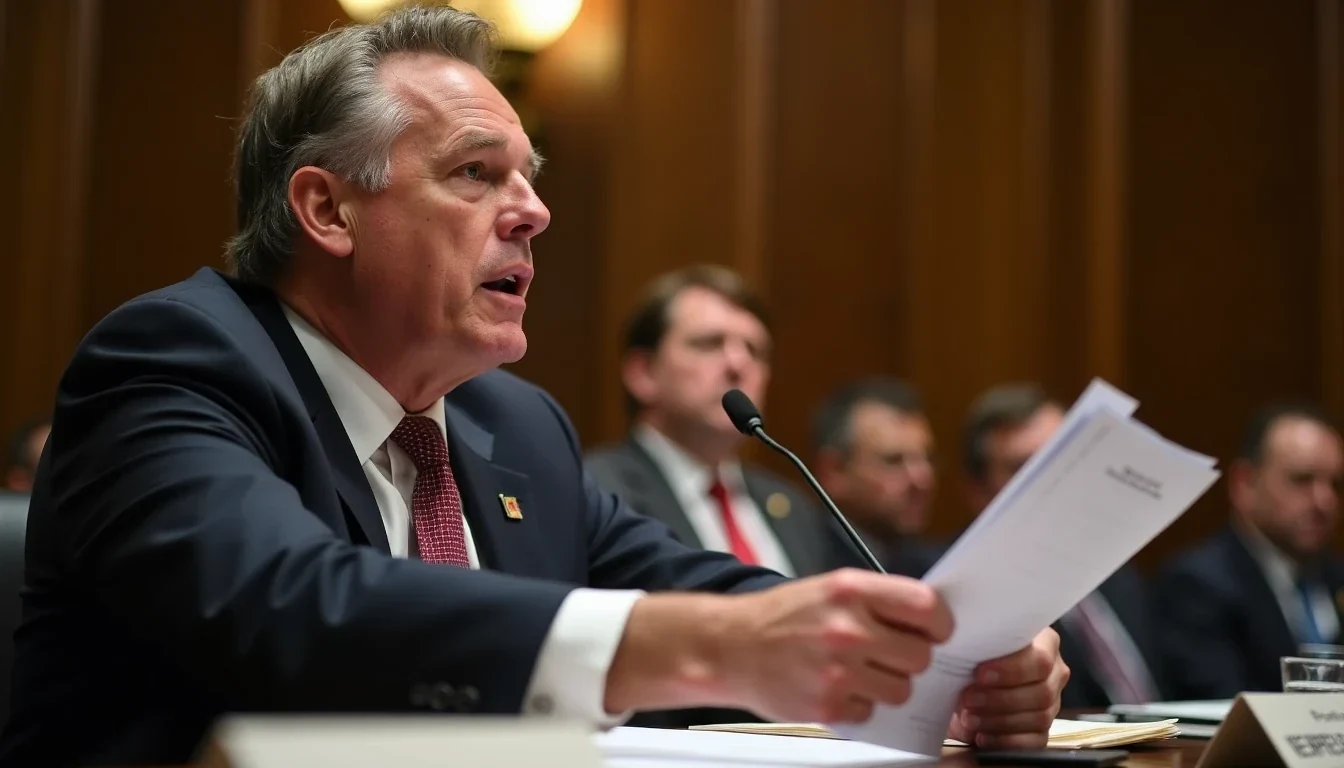
Pete Hegseth walked into the Senate with a number meant to calm the room: about $37.5 billion for the war with Iran, counted through the end of the fiscal year in September. Instead, it gave Democrats a cleaner target than the war itself. The figure looked tidy, defensible, and politically useful, which is exactly why it drew suspicion.
CNN and CBS, citing experts and sources, reported the obvious hole in the accounting. The Pentagon’s number appears to leave out major follow-on costs, including rebuilding U.S. bases damaged in the fighting. That kind of omission matters because it turns a price tag into a talking point. A war described as costing $37.5 billion is easier to sell than one whose real bill is still running upward in the background.
The number is doing political work
Hegseth was defending the Trump administration’s request for roughly $87.6 billion more for the Pentagon, and the $37.5 billion figure was part of that sales pitch. If the administration can present the Iran fight as a defined, measurable expense, then the next funding request looks like maintenance rather than escalation.
That framing is useful, but it is also incomplete in a way that smells deliberate. A damage bill for bases hit in the war is not a side issue. It is part of the war. Repairs, replacements, and the cascade of spending that follows when U.S. facilities take fire are also part of it. Leave those items out, and the official number starts to look less like an accounting and more like a defensive memo.
The criticism has landed because the dispute is not over whether the Pentagon spent money. It is over what counts as the real cost of a war that is still shaping the budget fight in Washington. If the broader bill is much higher than Hegseth said, then the administration is asking Congress to fund a conflict while presenting a narrower ledger than the one lawmakers actually need.
Democrats are attacking the war plan, not just the math
The hearing turned tense, and not only because of the price tag. Protesters were in the mix, and Senate Democrats used the moment to go after the administration’s Iran strategy itself. They did not treat the funding request as a routine appropriations issue. They treated it like a referendum on a war that has no convincing end state.
Their line of attack was straightforward. If the administration wants billions more, it should explain what the war is supposed to accomplish, how long it will last, and how it is supposed to stop. Those are not decorative questions. They are the questions that matter once a conflict stops being a headline and becomes a recurring item in the budget.
Democrats also pushed for a vote to end U.S. involvement. That move matters because it shifts the argument from oversight to authority. A vote would force lawmakers to say, on the record, whether they accept the administration’s approach or want to shut it down. Hegseth did not get that kind of procedural comfort from the committee. He got resistance, aimed at both the strategy and the spending.
Democrats are challenging the idea that the White House can run an Iran war on its own terms and then ask Congress to write the check after the fact.
The hidden costs are the real political problem
If the Pentagon is undercounting by billions, the issue is not bookkeeping trivia. It is leverage. A lower official figure helps the administration argue that the war is manageable and the next appropriation is justified. A higher real figure strengthens the case that Congress is being asked to finance an open-ended conflict whose full price has not been honestly described.
That is a bad place for the White House to be, especially when Congress has not approved the roughly $87.6 billion request. Lawmakers are being asked to expand funding while still arguing over the baseline cost of the war. The administration is fighting on two fronts at once: one over money, one over credibility.
The Pentagon can survive criticism for overspending. It has a harder time surviving the sense that it has defined the war in the most convenient way possible. Rebuilding damaged bases is not an exotic line item. If those costs are outside the official tally, the accounting is too narrow to carry much trust. Once trust starts to go, the rest of the argument gets harder to defend.
This fight is about who gets to define the war
This hearing cut deeper than a typical budget clash because it exposed the familiar Washington split between executive freedom and congressional control, but with live money attached. The administration wants room to prosecute its Iran strategy without having to argue over every cost category. Senate Democrats want to force the whole package into the open, then decide whether to keep paying for it.
The argument over $37.5 billion will not stay confined to the Pentagon’s spreadsheets. It now sits inside a larger fight over war powers, accountability, and whether Congress is being asked to ratify a conflict after the messy parts have already been hidden from view.
The administration may still get its funding. Washington has a habit of paying for wars it pretends to dislike. But if the true cost is meaningfully higher than the number Hegseth gave the Senate, the real damage is not only financial. It is political. It tells lawmakers the White House is trying to manage the optics of the war before it has managed the war itself.