
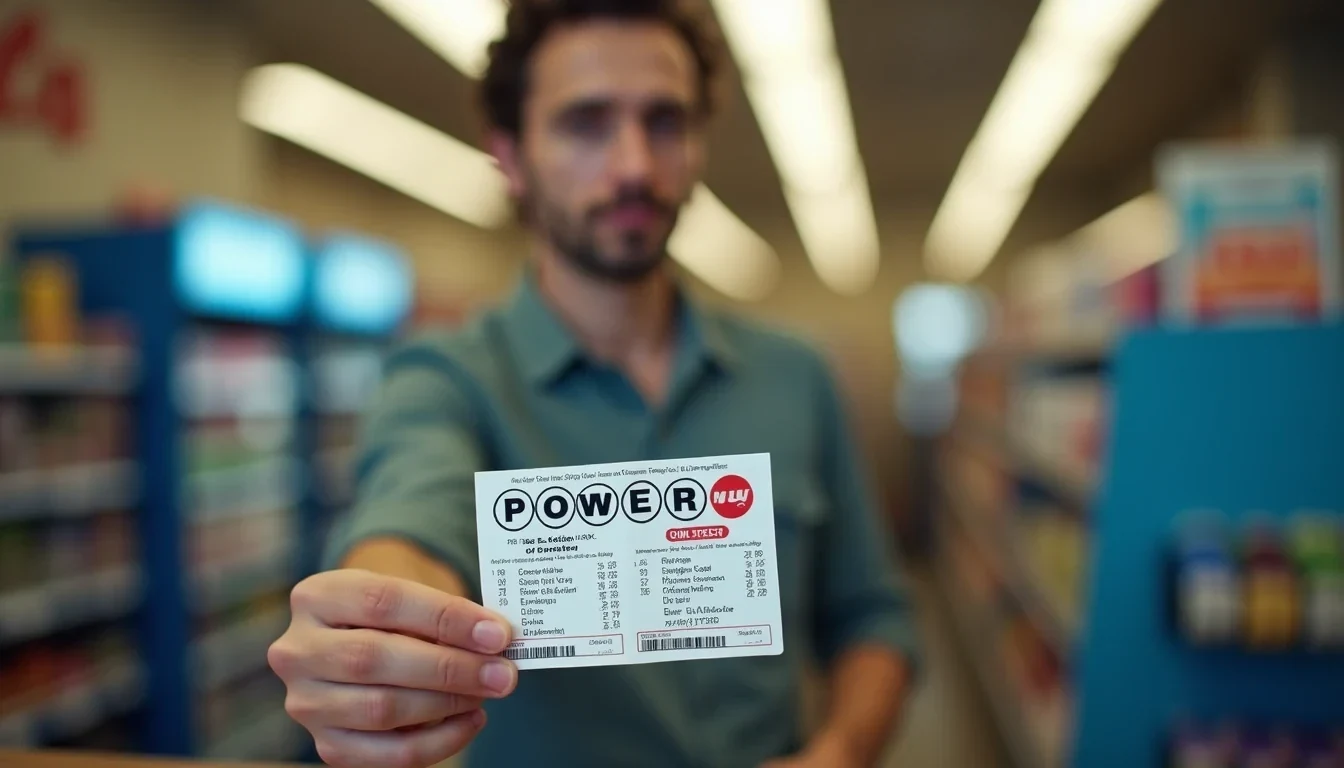
The American state lottery presents a strange contradiction in domestic policy: a government monopoly built on a product it spent decades prosecuting. Walk into any convenience store in Powerball country and you will find the same state that once dispatched federal marshals to shutter Louisiana’s lottery now operating its own, complete with geofenced mobile apps and third-party courier partnerships. The reversal is so complete that most players never consider what legal changes made it possible, or what subtle distinctions now separate the state game from the free-entry platforms that have multiplied online.
This distinction determines which laws apply, which agencies enforce them, and who keeps the money.
From Prohibition to Profit Center
The vocabulary itself carries the weight of this history. “Lottery” entered English from Dutch in the 1560s, rooted in “lot” as fate or portion. “Lotto” arrived two centuries later from Italian, naming a specific number-drawing game out of Genoa. The concepts predate both terms. The Old Testament describes Moses distributing land by lot. China’s Han Dynasty, between 205 and 187 BC, ran a Keno-like game whose proceeds helped fund construction of the Great Wall. Roman emperors including Augustus Caesar used dinner-party lotteries first for prizes, later for city repairs.
European cash-prize lotteries emerged in the 15th century in Low Countries towns like Bruges and Ghent, financing fortifications and poor relief. Queen Elizabeth I chartered England’s first State Lottery in 1566, with sales beginning three years later to fund harbor repairs. Every ticket holder received at least a small silver token, a guarantee that now reads as early consumer protection. The practice crossed the Atlantic in 1612, when King James I authorized lotteries to fund Jamestown’s settlement. George Washington, Benjamin Franklin, and John Hancock later ran them for the Continental Army, Harvard, Yale, Princeton, and roads.
Widespread fraud and corruption in the 19th century produced the backlash. By the late 1800s, both the United States and Britain had banned lotteries. The Supreme Court upheld American prohibitions. The Louisiana State Lottery, the most notorious operator, was forced out by 1894.
The modern revival began in 1964, when New Hampshire launched the first legal state-run lottery of the modern American era. Its initial tie to horse racing outcomes was a deliberate maneuver to bypass federal anti-gambling laws. The industry then evolved through computerized systems in the 1970s, instant scratch-off tickets in 1974, and multi-jurisdictional games like Powerball in 1992 and Mega Millions in 2002. Over roughly a century, lottery legislation moved through five eras: total prohibition from the 1920s through 1950s, when criminal syndicates ran illegal “numbers games” and only Ireland’s 1930 Hospitals’ Sweepstakes operated as a smuggled exception; the 1960s and 1970s return of state monopolies with revenue earmarked for education and health; 1980s and 1990s cross-border frameworks including the Multi-State Lottery Association, European Union exemptions for national monopolies, and South Africa’s 1997 Lotteries Act replacing its 1965 Gambling Act; 2000s and 2010s consumer protection laws with rigid age restrictions, advertising bans against presenting lotteries as investments, and mandatory odds disclosure; and the 2020s digitalization era with GPS geofencing for mobile sales and regulation of third-party courier services like Jackpocket.
The Legal Architecture of Free-Entry Platforms
Free-entry “lotto-themed” sites operate under an entirely different framework, classified as promotional competitions or sweepstakes rather than gambling. Their legal viability depends on removing one of the three elements that define a lottery: prize, chance, and consideration. By eliminating the requirement that players pay money to participate, these platforms bypass state-monopoly lottery acts entirely and fall under consumer protection laws instead.
The business model follows from this structure. Revenue comes from advertising, sponsored banners, and non-monetary tasks that yield points for extra entries. The visual number-matching theme, which awards in-platform points, is separated from the real prize layer where grand prizes are drawn randomly from all entries regardless of numbers selected. Players who match numbers may earn status or tokens within the platform; the actual cash or goods go to someone whose name was pulled from the complete entry pool.
This separation keeps the operation lawful.
Verification Without Trust
The trust problem that once made lotteries suspect, fraud and insider manipulation, has been addressed by modern free-entry platforms through an unexpected mechanism: they do not ask for trust. Instead, they use decentralized cryptographic verification through services like Drand, a distributed randomness beacon maintained by a global network of universities and tech organizations.
The process works in two stages. First, the platform generates a public hash of all submitted tickets. Then it pulls an un-fakeable random value from Drand’s network. A mathematical formula combines both values to select winners. The result is publicly auditable and tamper-proof, removing the possibility of internal software manipulation. The platform cannot know the outcome in advance, cannot alter entries after submission, and cannot favor particular participants without the discrepancy becoming visible.
This cryptographic infrastructure functions as an automated legal shield. Platforms that can demonstrate verifiable randomness are better positioned to defend against consumer protection claims of rigged or fake giveaways.
The Four Constraints
Four legal boundaries bind these operations. First, they cannot sell points or allow any spending that increases odds of winning. Doing so would reintroduce consideration and create an illegal lottery. Second, they must promote a legitimate business, which in practice is their advertising network. Third, entry costs cannot be artificially inflated through premium SMS charges, paywalls, or other mechanisms that function as hidden payments. Fourth, they face penalties under consumer protection laws for deceptive practices, including fake giveaways, which drives adoption of cryptographic auditing tools as both transparency measures and legal defenses.
The geographic spread of these platforms reflects how widely the underlying legal principle travels. Players interested in online lotto in the USA will find free-entry operations functioning under American sweepstakes law, with its particular requirements for no purchase necessary and alternate means of entry. Those looking at European lotto draws encounter similar structures adapted to EU consumer protection frameworks and national advertising regulations. For South Africa online lotto platforms, the post-1997 regulatory environment established by the Lotteries Act creates the conditions under which free-entry models can operate alongside the state-licensed National Lottery.
What the Distinction Reveals
The state lottery and the free-entry platform sell superficially similar experiences: numbers, drawings, the possibility of transformation. But their legal foundations point in opposite directions. The state lottery is a revenue extraction device whose monopoly is protected by criminal law. The free-entry platform is an attention extraction device whose legality depends on never charging for participation.
Both are profitable and regulated. Neither is quite what it appears to the casual participant.
The historical arc, from Moses to Mega Millions, from prohibition to state monopoly to cryptographic verification, suggests something about how American law handles chance-based revenue: it does not eliminate the activity, it assigns the proceeds. The 19th-century reformers who drove lotteries underground were not wrong about the fraud. They were simply replaced by governments that found ways to keep the money while promising stricter oversight. The free-entry platforms have found a different path, one that accepts the oversight of consumer protection agencies and the discipline of advertising markets in exchange for access to audiences the state systems cannot reach.
The player, as usual, is left to sort out which game is whose.